
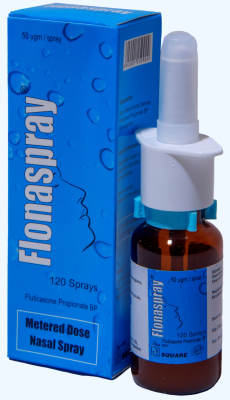
Flona Spray Nasal 120 Doses is a metered-dose nasal spray containing fluticasone propionate 50mcg per spray, a corticosteroid medicine that works locally inside the nose to reduce inflammation. The product is supplied in a bottle containing sufficient suspension for 120 metered doses.
Flona is primarily used for the prophylaxis and treatment of seasonal and perennial allergic rhinitis. Allergic rhinitis can cause symptoms such as repeated sneezing, runny or blocked nose, nasal itching and irritation, particularly after exposure to allergens such as pollen, dust or other environmental triggers. By reducing inflammation in the nasal passages, fluticasone can help control these symptoms when used regularly.
How it works
Fluticasone propionate is a corticosteroid with strong local anti-inflammatory activity. When sprayed into the nasal passages, it helps reduce inflammatory processes associated with allergic reactions. This decreases swelling and irritation of the nasal lining and helps relieve symptoms such as nasal congestion, sneezing and a runny or itchy nose.
Because it is administered directly into the nose, its action is primarily local. It should not, however, be used more frequently or at higher doses than prescribed.
How to use
For adults, the manufacturer's usual recommended dose is 2 sprays into each nostril once daily, preferably in the morning. In some cases.For children aged 4–11 years, the usual dose stated is 1 spray into each nostril once daily.
Shake the spray before use. Before the first use, or if it has not been used for an extended period, prime the applicator by pressing it several times until a fine mist appears. Gently blow the nose before administration. Insert the nozzle into one nostril while closing the other, keep the head slightly forward, and breathe in gently through the nose while pressing the applicator. Repeat as directed for the other nostril.
Precautions and warnings
Flona should not be used by anyone with a known hypersensitivity or allergy to fluticasone propionate or any of its components. Nasal infections should be appropriately treated. Particular care is required in patients being transferred from systemic corticosteroid treatment, especially where impaired adrenal function is suspected.
Patients who have recently undergone nasal surgery or sustained significant nasal injury should seek medical advice before using a corticosteroid nasal spray. Prolonged corticosteroid use, particularly in children, should be monitored by a healthcare professional.
Pregnant or breastfeeding women should discuss use with a healthcare professional before starting treatment.
Possible side effects
Nasal corticosteroids may cause local effects such as nasal dryness, irritation, unpleasant taste or nosebleeds. Persistent or severe nasal irritation, recurrent bleeding, visual changes or other unusual symptoms should be assessed by a healthcare professional.
Seek medical attention immediately if symptoms of a serious allergic reaction, such as facial or throat swelling, difficulty breathing or severe rash, occur.