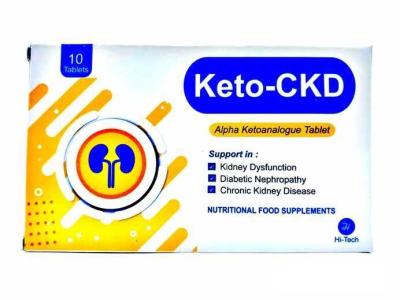
Ketogard Tablets 10s are specialised nutritional therapy tablets used as part of the dietary management of chronic kidney disease. They are intended for people with reduced kidney function who may require controlled protein intake while still needing adequate nutritional support.
The product contains alpha-ketoanalogues together with essential amino-acid components. The standard Ketogard formulation identified contains alpha ketoanalogue 381 mg together with L-histidine, L-lysine, L-threonine, tryptophan and tyrosine.
How to take Ketogard
The tablets are taken orally with meals. Swallow the tablets with water rather than chewing them.
The appropriate dose is individualised and can depend on factors such as kidney function, body weight and the amount of dietary protein being consumed. Because of this, a specific dosing schedule should not be selected from the pack size alone.
Ketogard should be used as part of the dietary plan recommended for the individual's kidney condition. Making substantial changes to protein intake without professional guidance is not recommended.
If a dose is missed, do not take extra tablets to compensate. Continue with the next scheduled dose unless otherwise instructed by a healthcare professional.
Important considerations
Ketogard contains calcium-containing ketoanalogue components, meaning blood calcium levels may increase in some patients. Monitoring may therefore be required during treatment, particularly in people receiving prolonged therapy.
People with existing high blood calcium levels or disorders affecting amino-acid metabolism require particular caution. The product also contains a phenylalanine-related component, which is relevant to people with phenylketonuria (PKU).
Other calcium-containing products may affect calcium levels when used alongside Ketogard. Some medicines can also interact with calcium-containing formulations by reducing their absorption. These include certain antibiotics and iron-containing preparations, so all medicines and supplements being taken should be disclosed to a pharmacist or doctor.
Storage
Keep the tablets in their original packaging and store in a cool, dry place away from excessive heat, moisture and direct light. Keep out of reach of children.
Ketogard is a specialised nutritional product for kidney disease and should be used as part of an appropriate renal nutrition plan rather than as a general dietary supplement.
KEY FEATURES
- Product type: Alpha-ketoanalogue nutritional therapy
- Dosage form: Oral tablet
- Main use: Nutritional management of chronic kidney disease
- Formulation: Alpha-ketoanalogues with essential amino acids
- Administration: Oral
- Use with: Protein-restricted dietary management
- Pack size: 10 tablets
- Key monitoring consideration: Blood calcium levels may require monitoring
USES / INDICATIONS
Ketogard Tablets may be used as part of nutritional management for:
- Chronic kidney disease
- Reduced kidney function requiring controlled protein intake
- Nutritional support during protein-restricted dietary management
- Supporting amino-acid and protein metabolism in appropriate CKD patients
HOW TO USE
- Take orally with meals.
- Swallow the tablets with water.
- Do not chew or crush unless the product leaflet specifically permits this.
- The dose is individualised according to factors such as kidney function, body weight and dietary protein intake.
- Use alongside the prescribed protein-restricted diet.
- Do not increase or reduce the dose without professional medical advice.
- If you miss a dose, do not double the next dose.
PRECAUTIONS & WARNINGS
- Do not use if you have a known allergy to any ingredient.
- Use with caution in people with high blood calcium levels (hypercalcaemia).
- People with disorders of amino-acid metabolism require medical assessment before use.
- The formulation contains a phenylalanine-related component and therefore requires particular consideration in people with phenylketonuria.
- Calcium levels may need to be monitored during treatment.
- Tell your pharmacist or doctor about all medicines, vitamins and supplements being taken.
- Calcium-containing products and certain medicines, including some iron preparations and antibiotics, may require careful timing when used with Ketogard.
- Do not use it as a substitute for prescribed CKD treatment.
COMMON SIDE EFFECTS
Possible effects include:
- Nausea
- Vomiting
- Abdominal discomfort
- Diarrhoea
- Increased blood calcium levels
Seek medical attention if you develop significant weakness, confusion, persistent vomiting, severe abdominal symptoms or other symptoms that could indicate a substantial rise in blood calcium.