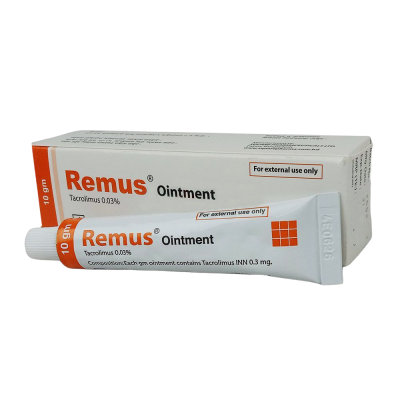
What is Tacrolimus Ointment?
Tacrolimus ointment is a prescription topical medicine belonging to a group of medicines called calcineurin inhibitors. It is primarily used to manage atopic dermatitis (eczema), particularly when other topical treatments have not provided adequate results or when other treatments may not be suitable.
Tacrolimus reduces excessive immune activity in the skin. This helps decrease the inflammation responsible for symptoms such as redness, itching and irritation.
What is Tacrolimus Ointment used for?
Tacrolimus ointment is primarily indicated for atopic dermatitis, commonly known as eczema.
It may be prescribed when eczema affects sensitive areas of the skin, including the face, neck or skin folds, where prolonged use of topical corticosteroids may be undesirable.
Tacrolimus ointment helps control eczema symptoms including:
- Itching
- Redness
- Skin inflammation
- Irritation associated with eczema
It controls inflammation but does not permanently cure the underlying tendency to develop eczema.
How does Tacrolimus work?
Tacrolimus inhibits an enzyme called calcineurin, which is involved in the activation of T-lymphocytes. This reduces the release of inflammatory substances involved in the immune response.
When applied to affected skin, tacrolimus reduces excessive immune activity and therefore helps decrease the inflammation and itching associated with atopic dermatitis.
PRECAUTIONS & WARNINGS
- Do not use if allergic to tacrolimus or any ingredient in the product.
- Avoid unnecessary sunlight and UV exposure.
- Do not apply to infected skin without medical advice.
- Avoid contact with the eyes and mouth.
- Inform your healthcare professional if the eczema becomes infected or significantly worsens.
- Consult a healthcare professional before use during pregnancy or breastfeeding.
- Do not use continuously for prolonged periods without medical supervision.
- Keep out of reach of children.
- The 0.03% and 0.1% formulations are not interchangeable without appropriate professional advice.
COMMON SIDE EFFECTS
Common local effects include:
- Burning or stinging
- Itching
- Warm sensation
- Redness
- Skin irritation
These effects are often most noticeable when treatment is first started.
Seek medical attention for severe allergic reactions, significant skin infection, severe skin reactions or marked worsening of symptoms.
-Photoroom.png)
.jpg)
.jpg)