

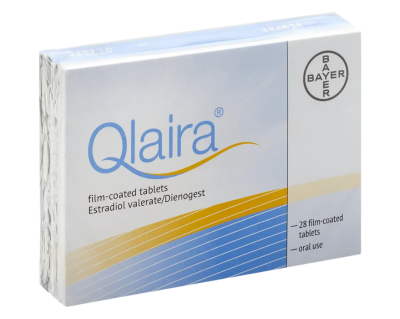
Qlaira Contraceptive Tablets 28s are combined oral contraceptive tablets used primarily to prevent pregnancy. They contain two hormonal ingredients: estradiol valerate, an oestrogen, and dienogest, a progestogen.
What is Qlaira used for?
Qlaira is indicated for oral contraception, helping prevent pregnancy when used correctly. It is also used for treatment of heavy menstrual bleeding in women without an underlying organic cause who want oral contraception.
HOW TO USE
- Take one tablet daily for 28 consecutive days, following the exact order on the pack.
- Take the tablet at approximately the same time each day.
- Start the next 28-tablet wallet immediately after finishing the previous one.
- If starting hormonal contraception for the first time, follow the recommended starting instructions provided by your healthcare professional.
- If you miss an active tablet, follow the missed-tablet instructions in the package leaflet because the action required depends on which tablet was missed.
- If vomiting occurs within 3–4 hours of taking an active tablet, additional instructions may be required because absorption may be incomplete.
PRECAUTIONS & WARNINGS
- Do not use if you have a current or previous blood clot or certain conditions that increase clotting risk.
- Inform your healthcare provider if you smoke, have high blood pressure, migraine, obesity, diabetes, liver disease or a family history of blood clots.
- Do not use with certain severe liver conditions or certain hormone-sensitive cancers.
- Do not use if you have unexplained vaginal bleeding until it has been assessed.
- Tell your healthcare professional about all medicines, herbal products and supplements you take because some medicines can reduce contraceptive effectiveness.
- Pregnancy should be excluded before starting when clinically appropriate.
- Discuss use during breastfeeding with a healthcare professional.
- Seek urgent medical attention for symptoms suggestive of a blood clot, stroke or heart attack.
COMMON SIDE EFFECTS
Reported adverse effects can include:
- Headache or migraine
- Nausea
- Breast discomfort or breast pain
- Acne
- Mood changes
- Irregular or unexpected vaginal bleeding
- Changes in menstrual bleeding patterns
Serious reactions are uncommon but can include blood clots. Seek urgent medical attention for sudden breathing difficulty, chest pain, coughing blood, severe or unusual headache, sudden weakness/numbness, vision problems, or painful swelling of one leg
.png)
